[Tsatskes]


Twitterverse Coffee
Popular Coffee Websites

Cafes by Zip Code
Coffee Podcasts

[Readers]

Locations of visitors to this page

[About]


[Blogroll]

43 Folders
Anders Fagerjord
Bay Area Bloggers
Berkeley Blogs
Blue Bottle Clown College
Cafexperiment
Coffeegeek
Denver Coffeehouses
Dogmilque
Doug Miller
Emily Chang's eHub
Hewn & Hammered
Jill's Definition of Weblog
Jonas Luster
Laughing Squid
Le Blaugue à Beleg
Loïc Le Meur Blog
Mark Bernstein
Moleskinerie
Seesmic Blog
Tant Mieux
The Dynamist
Tonx Dot Org

[Go]

Send Me Email:

coffeeblogger (at) doublesquids.com

Other Berkeley Blogs


SF Bay Bloggers
<<
#
Blogs That Flickr
?
>>
Blogcritics: news and reviews
Who Links Here


"The meaning of life and other trivia." Copyright ©2004, 2005, 2006, 2007, 2008 Jonathan David Leavitt. All rights reserved.

Every page now has Seesmic/Disqus video commenting. Scroll to the bottom to see or post video comments. There are also Haloscan comments at the end of each separate blogpost article. To read a text-only version of Jonathan's Coffeeblog on your iPhone or other mobile phone, click here. Or to see the graphics with less text, click here.

Go: [ Home | Previous | Archive | Gods & Myths | Cafes | Coffee | Nations & Empires | People | Arts ]
[ Words | New Media | Cinema | Gastronomy | Productivity | Yiddish ]

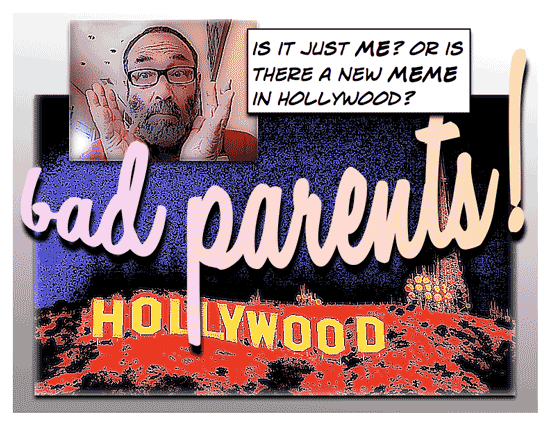
Bad Parent Movies

2:38 PM Sunday, December 30, 2007

[Is the new Hollywood really the old Hollywood?]

The New Hollywood Meme?

For some reason I haven't written for Jonathan's Coffeeblog for a few weeks, but I've been busy with other stuff, including much frustrating interaction with bureaucracies. However, I did watch a few movies during that time, three of which, by strange coincidence, all dealt with impassioned young people who were overreacting to nasty, overbearing "control freak" parents. Did I discover a new Hollywood obsession, a meme as it were, or perhaps an unconscious personal motive in the choice of films to see next: Into the Wild (in a theater), Transamerica, and Factory Girl (the latter two on DVD)? In the first of the three, a recent male college graduate resentfully makes a charitable donation of $24,000 given to him by his parents to buy a new car. He then disappears and goes on a grim journey, which he considers liberating, during which he works as a Dakota combine operator, travels with sympathetic hippy couple, tries life as a wetback (he abandons his ID before re-entering the US from Mexico), as a homeless street person and as a daredevil river kayaker. He becomes a surrogate grandson to a lonely old man, and finally tests his mettle alone against Alaska's Denali wilderness. The wilderness wins.

Based on the true story of Christopher McCandless, the film's premises are mixed and vague. The film is nevertheless interesting, extolling glorious old-school mythic themes with the help of superb high-budget Hollywood production values: the manifest destiny of the American West; the rugged individual who will not be fenced in; the wild land that refuses to be tamed or polluted to death; and the reincarnated wanderlust of Jack Kerouac in On the Road and Henry Miller in The Air-Conditioned Nightmare. Still, I could not help thinking, as I watched the tale unfold, that if the protagonist had ever been to Boy Scout camp or gone hunting with his father and learned how to dress a deer, the outcome would have been different. For him. The West is still the West, and a cowboy in any other guise is still a cowboy. Could that have been the premise of the film? Is the new Hollywood really the old Hollywood?

But what if the cowboy would rather be a cowgirl? That was the question asked in Transamerica, in which a male protagonist, uncomfortable with the gender he was born with, and grossed out by an outrageous cartoonish mother, decides that he can become a better woman than she is by undergoing male-to-female sex-change surgery. Just before the final operation, in which his "outie" is to be converted to an "innie," a male teenager contacts him, claiming to be the son he never knew about, the offspring of a brief romance with a woman who later died. The hero/heroine of the film, played brilliantly and fetchingly by Felicity Huffman, eventually learns that he can be a paren, and not a bad one, if not exactly either a mother or a father.

The third film, Factory Girl, addresses the Achilles heel of the great artist Andy Warhol, identified (correctly in my opinion) as the artist whose work inspired the art trends of second half of the 20th Century. Warhol, who could never stop trying to please his mother, who in turn would never accept him to be the homosexual that he was, engages in an intense relationship with a pretty Santa Barbara heiress named Edie Sedgwick, one of many children raised by a deeply disturbed father isolated on a huge ranch. Although Warhol worked with paint, photography (still and cinematic) and silk-screen printing, the medium that he mastered most effectively was the mainstream press and network television. And, yes,the art form that he perfected more than any other artist of the Pop school was the art of celebrity. Thus, he was irresistible to Edie, because he could, and did, turn her into a superstar. (Did Warhol invent that word? I think maybe he did.)

But Edie Sedgwick miscalculated. Knowing what everybody else knew, that Andy was gay, she took up with Bob Dylan, or someone very much like or close to Bob Dylan. That did not fit in with Warhol's plan to present her to his mother as the girlfriend that the mother had always longed to see. In the film, he does take her home to his mother; but after Edie became involved with Dylan, Warhol, who had easily made her into a superstar, changed her into a non-superstar, and then a nonentity. Edie died before she turned thirty. The whole Factory Girl story was true, or said to be true, by the witnesses and participants in the Warhol entourage, who are interviewed in the special features program of the DVD. (Bob Dylan did not participate in the special features and was called Danny Quinn in the Factory Girl cast.)

When I started writing this about Factory Girl I had planned to say that the film was not really about Andy Warhol, but about Edie Sedgwick. But thinking about it as I wrote, I realized that the film really was about Andy Warhol, with Edie playing the role of a tragic foil, just another pretty face, with a father who was, yes, a bad parent.

And while writing that I started to ask myself, was the film really about Andy Warhol? Maybe it was really about Andy Warhol's mother.

More Links:

More Images:

Permanent Link to This Entry | | | Technorati Tag:

Send a message to Jonathan: coffeeblogger (at) doublesquids (dot) com


I am Curiousyellow

12:07 PM Thursday, November 15, 2007

[Long? Boring? Banned in Massachusetts?]

Curious (Yellow)

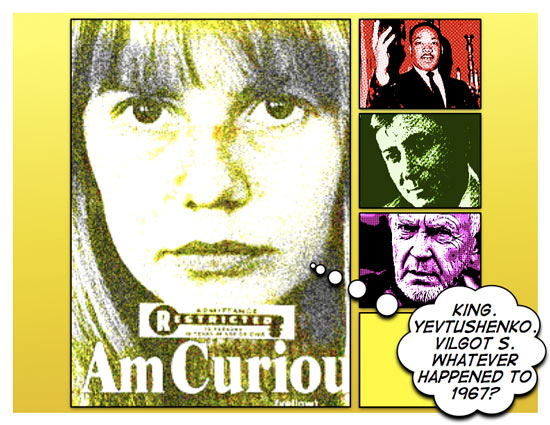
The month after I started Jonathan's Coffeeblog, I was curious about the process of starting a blog using the Blogger website. I gave my exploratory blog the title "Curious" with the username (changed later) of "curiousyellow," which I made up on the moment, suddenly recalling the 1967 Swedish film I am Curious (Yellow). Since then, curiousyellow has been my username on many social websites, including Flickr, del.icio.us, Twitter, and Seesmic. Recently I decided to see the movie again to see if my opinion of it had changed. It has changed.

The film, directed by Vilgot Sjöman, who died last year, concerned the problems of a young woman barely in her twenties, played by Lena Nyman, as a character of the same name. To make three long stories short: 1. The movie was all about Lena's problems during the run-up to the 1968 world political cataclysm; 2. There was much explicit sexual intercourse in the film, guaranteeing its notoriety in the USA; and 3. Sjöman's postmodernesque and proto-hypertextual structuring of the film also guaranteed mass confusion among disappointed US viewers, my young self included. I came to see sex scenes so allegedly outrageous that the film was banned in Massachusetts (yes, that Massachusetts!), and saw nothing of the kind.

I remember the conventional wisdom of the time: the movie was long and boring, Lena Nyman was no Marilyn Monroe, and the sex was not sexy. Looking back forty years, I have to say that all of the above was true, but irrelevant. Curious (Yellow) was and is quite an interesting film.

The length and pace of the film had a lot to do with Sjöman's post-Hollywood style, which I will address in a moment. Lena Nyman was very cute, appeared underage, and her sexual adventures in the film appeared to be the product of sadness, frustration, desperation and unrequited love, not the lewdness one yearned for. Disappointed and outraged by a missing mother, a zhlob of a father, and a sleazebag boyfriend, Lena (the character) was a very confused, and in my mind, sympathetic young lady. If Americans had not been suffering under the yoke of Comstockery (the legacy of Anthony Comstock from 1873), the preposterous banning of the film would never have happened, and the film would have been a mere unmentioned flop in the US market.

Two real-life characters played cameo roles in Curious (Yellow), the Rev. Dr. Martin Luther King, Jr., and the Russian poet Yevgeniy Yevtushenko, author of the politically incorrect poem Babi Yar, and who now (2007) teaches in Oklahoma and New York. Both were icons of the political earthquake rumbling at the time the film was made.

Another theme running through the film was the Spanish Civil war, in which Spain's Republicans fought desperately against the dictator Generalissimo Francisco Franco, who was backed by the National Socialists of the Third Reich. In the film, Lena's father had gone to Spain to fight Franco, then changed his mind and came home. For this apparent cowardice, Lena never forgave him.

I call the structure of the film "hypertextual" because at many different points it branches off into a variety of topical subjects. Sjöman, in fact, made two versions of the film, Yellow and Blue, named after the colors of the flag of Sweden. (I haven't see Blue yet, but it's on order. It's said to be, not a sequel or prequel, but a restructuring of the same film footage used to make Yellow.) If Curious (Yellow) and (Blue) were in the public domain, it would make a great Internet phenomenon with a variety of texts and images coordinating the links to the various film clips, perhaps posted to YouTube or elsewhere. Of course, in 1967, hypertext was virtually unknown, although Ted Nelson had coined the term two years earlier.

When I call Sjöman's film "postmodernesque" I am referring to its self-referential and paradoxical qualities. It could be called a political film, and is, but Sjöman is no Michael Moore. He is subtle, intellectual, creative, and reflective. It could just as easily, today, be called a psychological study of a young woman, or even a "chick flick," if Lena were not the only "chick" of consequence in the film. Sjöman put himself in the film, as Fellini had done, in the role of the director of the very film one was viewing, and as a lover of Lena, who, like all of her significant others, also abandons her. At any point in the film (example: Lena interviews the King of Sweden) what occurs on the screen, sex included, could be part of the narrative, or more likely, a fantasy in Lena's head.

As for the real-life Lena Nyman, her acting career in Swedish films and TV is still going on, and in 1978 she co-starred with Liv Ullman in Ingmar Bergman's Autumn Sonata. As for my blog, Curious, I changed it to a photoblog, leaving the original posts intact, but I have not posted to it for years.

More Links:

More Images:

Permanent Link to This Entry | | | Technorati Tag:

Send a message to Jonathan: coffeeblogger (at) doublesquids (dot) com


Edith Piaf, the Movie

4:01 PM Friday, July 13, 2007

[The vernacular language of Paris.]

La Môme Piaf

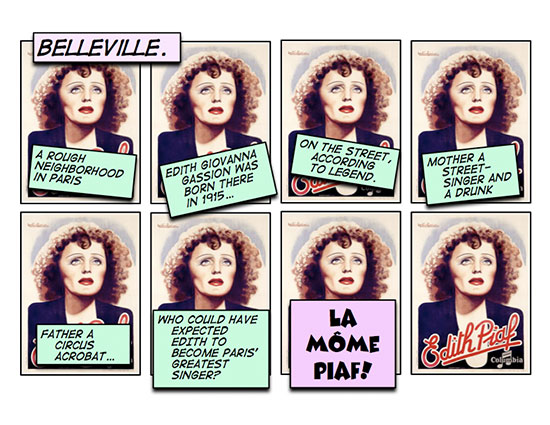
The other day I saw a great movie with a friend and I want to write about it to recommend it to my readers. I'm having a hard time writing about it, however, and I don't know why. Maybe I'll figure out why by the time I finish this. Anyhow, the movie was about Edith Piaf, the great French singer who died in the 1960's, and was named (for non-French audiences) La Vie en Rose, meaning "life in pink" or "the rosy life," after the famous song written by Piaf herself. The French title of the movie is La Môme, meaning the "kid" (human, not goat), and is Parisian slang. Actually, the vernacular language of Paris was almost as much the subject of the movie as Piaf herself.

Perhaps I'm having a hard time writing about this because I'm a little embarrassed about how much I was moved by the film, which, incidentally was directed by Olivier Dahan, written by Dahan and Isabelle Sobelman, and starred Marion Cotillard as Edith Piaf with Jil Aigrot as Piaf's singing voice. Full disclosure: I was infatuated with all things French since high school, when I studied the language and first heard one of La Môme Piaf's songs, Milord. I subsequently collected recordings of all of her music and spend two summers in France while a college student in the 1960's.

Piaf slowly worked her way up from the streets to cabarets to music halls to world fame. Some critics panned Dahan's film because the scenes of Piaf's life were taken way out of chronological order. The decision to do so was, in my view, what saved the film and made it so powerful. However, I knew Piaf's biography well before I saw it, and perhaps if I didn't know her story, I would have been lost or confused watching Dahan's production. The thing is, portrayed in strict chronological order, Piaf's life would be so much of a hard-luck-lady, rags-to-riches, little-poor-girl-makes-good stereotype that the tale would have been boring if not laughable.

Some things stood out as I watched the film: Piaf's loyalty to her "sister" and bosom companion Momône (that's right, La Môme and Momône), Piaf's courage about revealing her vulnerability without flaunting or exploiting it, and most of all, her brilliant articulation of the Paris street language in speech and in song.

In American terms, Piaf's lyrics most resemble country music, all about the grit to get through hard times, having been dealt a bad hand by life. But imagine if there were a kind of city country music that they sang in Brooklyn, with a Brooklyn accent. That would be a little closer to Piaf than country music. (Hey, I was born in Brooklyn and learned to talk there.) The urban blues (think Chicago), though also dealing with hard knocks, are very different from Piaf's songs, Blues songs are rarely love songs and most of the lyrics Piaf sings are obsessed with love. And finally, Piaf's music is quintessentially French and Parisian, almost untranslatable.

Now it's becoming clearer why it was so hard to write this. The movie revealed to me how much I still love France and her language, in spite of the the last decade of France's anti-Semitic street violence and her ruling elite's smug and petty anti-Americanism. The French gave us Americans the Statue of Liberty and the Marquis de Lafayette, who helped liberate us from Old World tyranny. And whether we Americans appreciate her or not, they also gave us Edith Piaf. As she sang, C'est payé, balayé, oublié; je me fous du passé ! (It's paid up, swept clean, forgotten; screw the past!) and maybe I can learn from that.

Piaf Paris Belleville Cabaret

More Links:

More Images:

Permanent Link to This Entry | | | Technorati Tag:

Send a message to Jonathan: coffeeblogger (at) doublesquids (dot) com


Ninna Nanna Malandrineddu

2:04 PM Saturday, June 16, 2007

[Keep the family's honor.]

Little Marauder Lullaby

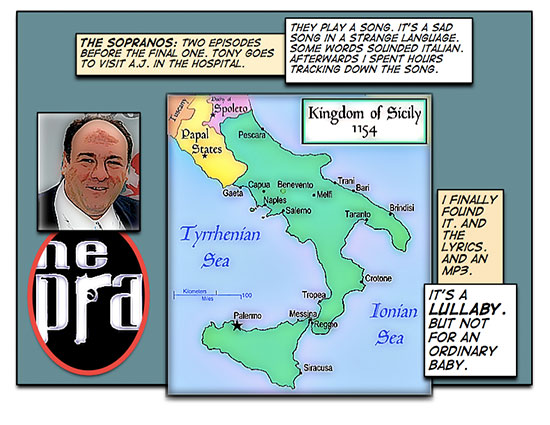
It's over. The Sopranos television series has aired its last episode. If you're a fan like I am you've seen them all, and you're going to miss Tony and Carmela and Meadow and AJ and the rest of the family and the Family. At the end of the third episode from the last, AJ is in the hospital, and Tony goes to visit him. A song starts to play and then the credits roll.

Talk about haunting melodies. I had to find out what that song was. I had to track it down, and I did. There was stuff on the bulletin boards about it, including some innacuracies and misinterpretations. But I found it. The song is called Ninna Nanna Malandrineddu, which could be translated, accurately I think, as "Little Marauder Lullaby." It's Italian, but from Calabria, the toe of the boot, on the other side of the Straits of Messina from Sicily. (In the Middle Ages, it was all Sicily, clear up to Naples and beyond.) The song's on an album called Omerta, Onuri e Sangu, La Musica della Mafia, written (I think) by Demetrio Siclari and sung by Saveria. Pia Calamai, a collector of Italian lullabies (ninne nanne) has also been credited on a few sites.

Picture this: a young mother is trying to get her baby to sleep. She's a widow. The baby's father is dead, whacked by a hit man. The mother is seething with rage. What does she croon to the baby? "I’onuri da famigghia ha manteniri / Figghiuzzu a to patri I'ha vendicari." You have to keep the family's honor, little son, and avenge your father. (Remember AJ and Uncle Junior, after the demented uncle shot Tony?)

This is not a song I'd want to sing myself to my own children or grandchildren, but like the Sopranos TV series, it resonates with a disowned part of me, and of most Sopranos fans, I suspect: the part that CG Jung called "the shadow side." (Maybe it should be called one's "Inner Wiseguy.") I liked the song enough that I had to have an MP3 of it, and after some major googling I finally downloaded one. With all due respect to Mr. Siclari and Miss Saveria and all the artists who produced the "Musica della Mafia" album, I didn't pay a cent for it. Let's just say that it fell off a truck.

More Links:

More Images:

Permanent Link to This Entry | | | Technorati Tag:

Send a message to Jonathan: coffeeblogger (at) doublesquids (dot) com


Gangs of New York

12:40 PM Thursday, May 31, 2007

[Foreign religious meddling?]

Gangs of New York

The American film director Martin Scorsese grew up watching Italian films, and his 1973 Mean Streets was inspired by Fellini's I Vitelloni. As a Fellini buff, I'm now renting DVD's of all of Scorsese's films, and recently saw his 2002 production, Gangs of New York. The gangs referenced included no Italians. They had not yet started their great migration to the USA during the period in which the action takes place, from the 1840's to the American Civil War, when New York was under the thumb of the political boss Tweed. This was the same period during which Charles Dickens wrote his novels on the same theme as Gangs: the desperation of the urban poor, the folks Marx was calling the proletariat.

It was odd to see the first gang fight take place in a snow-covered public square surrounded by wooden houses, the kind of early Americana which now draws tourists to such places as Martha's Vineyard and Disneyland's Main Street. Scorsese had reconstructed Five Points, a notorious slum in lower Manhattan, which was visited by Dickens himself in 1842. Dickens wrote of what he saw: "Debauchery has made the very houses prematurely old. See how the rotten beams are tumbling down, and how the patched and broken windows seem to scowl dimly, like eyes that have been hurt in drunken frays."

I didn't bother to see Gangs when it hit the theaters at the end of 2002 because it lacked the Italian-American goodfella pizza pizzazz of other Scorsese films like Raging Bull and Goodfellas itself, or the Godfather series and the Tony Soprano epic from other filmmakers. Who wants to see a bunch of white Protestant Anglo-Saxons get it on with Irish potato famine refugees? When I finally saw Gangs, I did. The plot of Gangs is very similar to Scorsese's more recent success, The Departed, which made more money faster: A young, tough Irish-American, played by the same actor, no less (Leonardo DiCaprio) finds himself beholden to his worst enemy as the enemy's beloved and most trusted lieutenant. What makes Gangs an interesting film, however, is the pivotal role of the people, the place, and the time depicted. I was born in New York, and the film helped me understand better that city and its influences on my character.

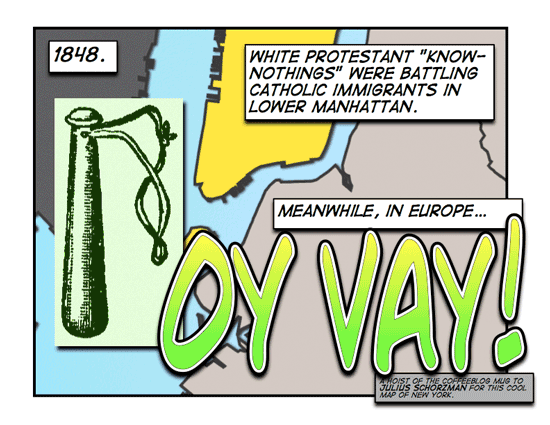
In 1848 the European world experienced a cataclysm called the Revolutions of that year, when the express train of Enlightenment liberalism ran into the solid rock wall of established oligarchy, triggered by mass migrations combined with economic disasters like the Irish famine and a huge financial panic. The USA was not spared, and experienced the same cataclysm a dozen years later in the form of the Civil War and the 1863 Draft Riots, both of which are addressed in Gangs. Scorsese shows Irish refugee men conscripted into the Union Army, boarding the boat which takes them to battle almost as soon as they get off the boat from Ireland. Perhaps one of the most incredible of the superbly crafted action sequences of the film is the one of the US Navy shelling New York to bring an end to the riots. But Gangs is not mere history: it is relevant right up to the day I write this. Gangs still kill each other in American cities, political hacks like Boss Tweed still play both sides against the center, and masses of American-born citizens still fear foreign religious meddling (in Gangs it was the Pope, but what about now?) and a flood of immigrants, who, it is feared, will never, ever, assimilate.

More Links:

More Images:

Permanent Link to This Entry | | | Technorati Tag:

Send a message to Jonathan: coffeeblogger (at) doublesquids (dot) com


Molon Labe: 300, the Movie Review

8:20 PM Monday, April 9, 2007

[Bashed, impaled, speared, run through, mutilated and pierced.]

Molon Labe!

Do a Google search for the phrase Movie Reviews "300." You will probably, as I did, get about 22,100,000 hits. Why, you might ask, does the Warner Brothers action movie, based on a Frank Miller graphic novel, in turn based on the Battle of Thermopylae which took place in Greece in 480 BC, require yet another review, which is what you are reading? Read on…

If you want extensive details about the movie, explore some of the 22 million Google hits, and read what I wrote about the graphic novel here in Jonathan's Coffeeblog. Right now I am going to focus on one miniscule event in the movie: the scene when King Leonidas of the Spartans, asked by the Persian enemy to surrender the weapons of his ridiculously outnumbered force of 300 men, replies "Come and get them!" This defiant phrase has a history all its own. In Greek the phrase was molon labe. It is still the motto of the First Army Corps of the Hellenic Republic. Translated into English, it was the battle cry of a band of Texans in the town of Gonzales when defending their one cannon against the centralist government which had taken over Mexico.

The defiant spirit of molon labe permeates the entire movie. It is a very violent movie. Much blood is shed, heads roll, human bodies are bashed, impaled, speared, run through, mutilated and pierced too many times to count. Not all the piercing is combat-related. The character of the Shah Khashayar (Xerxes) is portrayed, for reasons one can only guess at, as an extremely tall tanned exotic wearing eyeliner, many pounds of heavy jewelry, and enough punk body piercings to gross out Fakir Musafar. (Well, not really.)

Other variants of molon labe include "bring it on!" which is a slogan equally beloved by former US presidential candidate John Kerry and televangelist Pat Robertson. My favorite molon labe-ism, however, is Clint Eastwood's "Go ahead. Make My Day," from his 1983 film Sudden Impact. The American Film Institute rates Eastwood's line as the sixth greatest movie quote of all time. What then, is Number One? It is Rhett Butler's rejoinder to Scarlett O'Hara in the 1939 film Gone with the Wind: "Frankly, my dear, I don't give a damn." And that brings me back to one of the 22,100,000 reviews of 300, in particular, the one in the New York Times, whose critic wrote: "its muscle-bound, grunting self-seriousness is more tiresome than entertaining." Violent, in-your-face, arrogant, jingoistic, cartoonish (it was a comic book, remember) as 300 might be, tiresome it's not. And even if it were, well, frankly, my dear… If you can handle the violence, go see it.

More Links:

More Images:

Permanent Link to This Entry | | | Technorati Tag:

Send a message to Jonathan: coffeeblogger (at) doublesquids (dot) com


300: The Book Review

7:04 PM Sunday, March 25, 2007

[Testosterone-powered drama.]

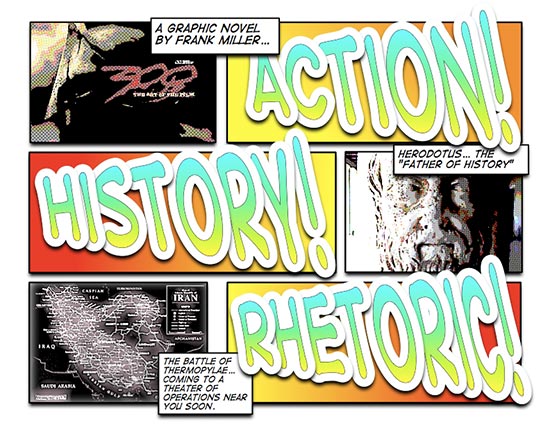
Action! History! Rhetoric!

A fascinating cultural phenomenon is unfolding before us. A battle fought 2,486 years ago, chronicled by a Greek known as the Father of History, resurrected from the dusty basement of academia by a cartoonist who turned it into a 1990's comic book series, has now hit the movie theaters in a groundbreaking mash-up of cinematography and computer graphics, a blockbuster hit, which inspired an cry of outrage from the spokesmen for a Middle Eastern theocracy, who are blaming the whole thing on (that's right) the Jews.

I haven't seen the movie yet, but I have purchased the book, which is a hardbound edition combining the five comic books in which Frank Miller's "300" were originally issued in 1998 by Dark Horse Comics. In the year after it came out, "300" received the Comics Industry Will Eisner award, named after an industry legend, father of the Spirit series. (Will Eisner is not to be confused with Disney exec Michael Eisner.) For fans of cartooning, comics, comix, and graphic novels, of which I am one, the reprinted Miller work is a superblly collectible example of the art, and well worth the $18 Amazon price.

At Thermopylae, a narrow pass in Greece blocking access to the vast Persian army under Xerxes I (the great shah Khashayar, remembered annually in the Jewish holiday of Purim), a confederation of Greek warriors held off the Persians long enough to enable a Greek victory in a later sea battle. The Spartan warriors who held off the Persians at Thermopylae all perished in the process, having created one of those rare moments, like the Alamo and the Battle of Kosovo, where the losers got to write the history. The graphic novel, vividly colored by Lynn Varley, conveys the testosterone-powered drama of the great battle while laying no claims to historical accuracy in the portrayal of either Greek or Persian dress and accessories of the time.

Greater Iran, called Iran Zamin, at times a powerful empire beginning 2700 years ago, has rarely been defeated by invaders from either the East or the West, notable exceptions having been the British, the Arabs, the Mongols, and Alexander the Great. Iran was for millenia the far eastern limit to the Roman Empire, and by implication, Western hegemony. Thermopylae, for the West, has become symbolic of Western resistance to the Eastern "hordes" which included Huns, Mongols, Arabs, and Turkic Muslims, but not, until now, Iranians. This fact has not been lost on the current Arab-admiring theocratic and militant Shia regime in Tehran, which issued a statement condemning "Warner brothers, which belongs to the rich and famous American Jew." Do they mean Jack Warner? He died in 1978.

More Links:

More Images:

Permanent Link to This Entry | | | Technorati Tag:

Send a message to Jonathan: coffeeblogger (at) doublesquids (dot) com


Deadwood

3:56 PM Friday, February 2, 2007

[There is a lot of bluntness in Deadwood.]

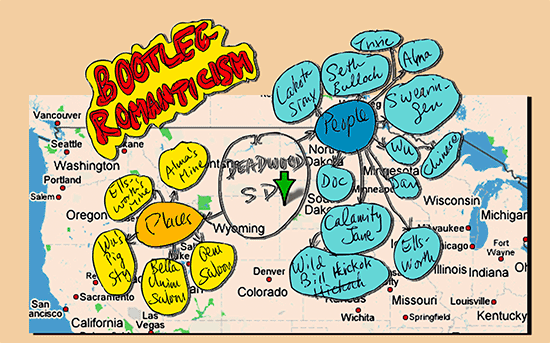
Deadwood: Bootleg Romanticism

A few years ago, fed up with my local monopoly cable TV service, I cancelled it and instead subscribed to DSL internet access for around the same cost. Giving up TV was not all that hard—for a while—but I gradually found myself spending more time watching Blockbuster rentals, and finally, I joined Netflix. What have I learned? Among other things, I learned that there are great movies out there that never get shown in the theaters (as, for example, those produced by HBO, the "home box office"}. Great in what sense? As series that can go on for thirteen hours every year, for years, they can make use of character, plot, and background material in ways that can't be done in a typical feature film. Compare, for example, the Godfather I through III feature film series, with The Sopranos.

Deadwood is such a series, focused on the former mining camp in the Dakota Territory, land of the Lakota Sioux, and now a town which attracts tourism with legalized gambling. The unity of time and place in the series is the period before statehood (1870's), when there was literally no law, and order was a work in progress. There were many legendary characters who were there at the time: Wild Bill Hickok, Calamity Jane, Seth Bullock, and they are portrayed in the series along with fictional characters.

The TV series functions well on several levels. First of all, it is excellent drama with believable human dilemmas in each episode, but not at the expense of melodramatic action. Bluntly (there is a lot of bluntness in Deadwood), there is plenty of violence, some sex, and every episode is rarely if ever boring. Secondly, the series is highly researched, a historical film par excellence, and grittily realistic, down to the profanity that malodorous drunks and filthy miners would have used in that era, or at least a reasonable facsimile thereof. Thirdly, Deadwood works hard to show the humanity of every major and many of the minor characters, good, evil and mostly a combination of both. But it is not simply a "slice of life" exercise in realism or naturalism.

At its highest levels, Deadwood dares to tackle themes of morality, of what is right and what is wrong, including what is right and wrong not only in an anarchic mining camp but also with constitutional but flawed government, then and now. And even as a morality play, Deadwood functions on two levels. There are the stock villains of contemporary political correctness: white racists, obscene male chauvinist pigs, fat greedy corrupt businessmen, and a religious zealot who is actually a madman. On yet another level, however, there is what Ayn Rand called "bootleg Romanticism." There are good guys and bad guys (and gals), people who chose to be good or bad and acted on their choices with some or even a fair amount of success, in spite of the grinding determinism of trauma and poverty. In my childhood, good guys and bad guys were portrayed in Westerns wearing white hats and black hats respectively. In the Deadwood TV series, almost everyone literally wears black hats or none at all, but the viewer has the satisfaction of making moral judgments, which, as in life itself, is not always easy.

More Links:

More Images:

Permanent Link to This Entry | | | Technorati Tag:

Send a message to Jonathan: coffeeblogger (at) doublesquids (dot) com


Vlogging a Dead Horse

3:33 PM Friday, December 1, 2006

[Captain Video has been promoted.]

As of today, Jonathan's Coffeeblog makes its debut as Jonathan's CoffeeVlog. That's right, instead of the usual static image, there's a video, courtesy of YouTube. If you can get the YouTube link to run, you will see a talking head clip of your trusty CoffeeVlogger pondering the difficult question of whether the term vlog is monosyllablic, with a V instead of a B, or polysyllabic, pronounced vee-log in English.

But what is the dead horse to which I allude in the title of this vlogpost? Yes, you guessed it, the dead horse is the blog, that is, a weblog without video. Earlier this year I wrote pondering what would be the next big thing. Well, now I know. The next big thing is here, and it's video. I should have known back then. I used to watch a program called "Captain Video" on television back in the early 1950's. It now appears that Captain Video has been promoted to Generalissimo Video and he has become the Caudillo of the Internet. Jonathan's Coffeeblog is mere weeks short of celebrating its second anniversary, and already it's Old Media. That is, it was until today.

Is vlogging just a passing fancy, a fad, and will the Internet of the future be ruled by text and static images? I doubt it. However motion graphics, in my opinion, always seemed to be grafted onto a website rather than an integral part. Those fancy (or boring) Flash animations on high-priced websites seem to require a "skip" link so that the viewer doesn't have to watch them before he moves on the the nitty gritty he was looking for. YouTube, successful as it is, seems (in my opinion) to be a place to link to, not so much of a place to browse.

Adrian Miles, an Australian media academic, takes video blogging very seriously. He calls them vogs, not vlogs, and at the turn of the (21st) century, declared a manifesto he called vogma, about vogs. He has published a video blog with minimal text, but on the topic of vogging, he publishes a plain old text-and-static-image blog, just as I did before I became the CoffeeVlogger. In fact, I may go back being the Coffeeblogger again and save this vogging business for times when (to paraphrase Marshall MacLuhan—remember him?) the motion is the message.

More links:

More images:

Permanent Link to This Entry | | | Technorati Tag:

Send a message to Jonathan: coffeeblogger (at) doublesquids (dot) com


Bettie Page

9:23 PM Monday, April 17, 2006

[Stranger bedfellows than one would imagine]

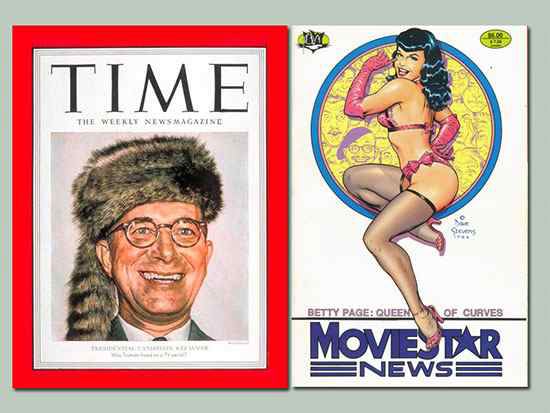
The recent publicity around the movie The Notorious Bettie Page has brought back memories to old-timers like me and also reminds us how politics makes for even stranger bedfellows than one would imagine. The movie tells the tale of Bettie, a sweet Southern girl who appears perpetually naive about men after being molested repeatedly by her father. She becomes a New York pinup model, and is now a national icon and the most famous fetish/bondage model of all time. Her sweetness and innocence, portrayed in the film by Gretchen Mol, overshadows the popular preoccupation with the dark side of kink erotica. At the time of Bettie's early popularity in the 1950's, however, that preoccupation was the focus of a Congressional investigation led by Tennesseean Estes Kefauver, who apparently believed, as many do today, that comic books and girlie magazines were a significant cause of criminal behavior in youth. Kefauver died of a heart attack in 1963, and was thereby spared having to see the Internet content and graphic novels of the current era (2006).

The film about Bettie, which was written and directed by women, Guinevere Turner and Mary Harron respectively, also portrays the brother-sister photography team of Irving and Paula Klaw, who started out with a store selling movie magazines, then created a pinup and fetish photography studio. The Klaws were targeted by the Kefauver hearings, and ultimately closed shop and burned most of their negatives. The closure of the Klaw studio, advancing age, and ultimately being overwhelmed by decades of pent-up rage, brought about a long period of hard times for Bettie (not shown explicitly in the film) until she was rediscovered as a living icon in 1992.

So what does this all have to do with the meaning of life? Freud referred to the "it" (id in Latin) a reservoir of instinctive passion in all of us, which has to be kept under control. Art and popular media (both of which include comics and erotica) celebrate, but also exploit the "it" in the form of sex, violence, and violent sex. The "it" terrifies us, fascinates us, excites us, destabilizes us, and has the potential to turn us into artists, criminals , and politicians. Kefauver, although reviled by his contemporary political enemies for opposing racial segregation, got into his anti-comics and anti-erotica crusade while investigating organized crime. You might say that the strangeness of their bedfellows was a problem that afflicted both Estes and Bettie in their era, as it affects sex workers and politicians today.

Links to more about these topics:

Links to more art and images about:

Permanent Link to This Entry | | | Technorati Tags:

Send a message to Jonathan: coffeeblogger (at) doublesquids (dot) com


White Swan, Black Swan

3:38 PM Wednesday, February 8, 2006

[Mythmakers par excellence]

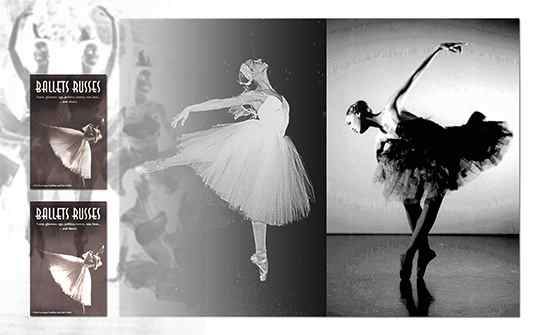
For years, I have been going to see the San Francisco Ballet with a friend who loves the ballet and has season tickets. Last week we saw that company's Swan Lake, and the week before, a documentary film called Ballets Russes. I make no claim to any expertise or special knowledge of ballet, but since when has the Coffeeblogger refrained from commenting on any artistic topic?

Swan Lake is a more than an ordinary ballet, which the San Francisco Ballet has been performing since 1940. Pyotr Ilyich Tchaikovsky, the Russian who composed the score, and the great choreographers and dancers who created the performances, were mythmakers par excellence. The story is of a prince, ordered to marry by his parents, who meets, by the lake, and falls in love with the White Swan, a young woman who has been changed from human to bird by an evil magician. The magician tries to marry off his own daughter, the Black Swan, to the prince by disguising her as his true love. The prince and the White Swan evade his plan, but only by leaping into the lake, ending their lives.

The film Ballets Russes concerns a ballet company (the Ballets Russes de Monte Carlo) which not only dominated the 20th Century ballet scene in Europe and the Americas but reportedly made ballet fans of countless North and South Americans. Like the two swans in Swan Lake, there were actually two rival Ballets Russes companies who toured the world. Given the economics of the ballet world, anyone who can create a company and take it on tour is a magician. In the film there were multiple magicians: three impresarios, one Russian, one French, and one American, three choreographers (four if you count Balanchine), and many dancers who are now legendary. The original Ballets Russes made its reputation on the talent of teenage stars (one was actually 12), known as the Baby Ballerinas. In the film these ballerinas, now old women, are interviewed and provide much of the narration. The story, though a true one, is every bit as incredible as that of the Prince and the Swans in Swan Lake.

| Technorati Tags:

Send a message to Jonathan: coffeeblogger (at) doublesquids (dot) com


A Male Alice in A Wonderland of Women

3:54 PM Saturday, January 21, 2006

[A giant inflatable fantasy woman with a halo]

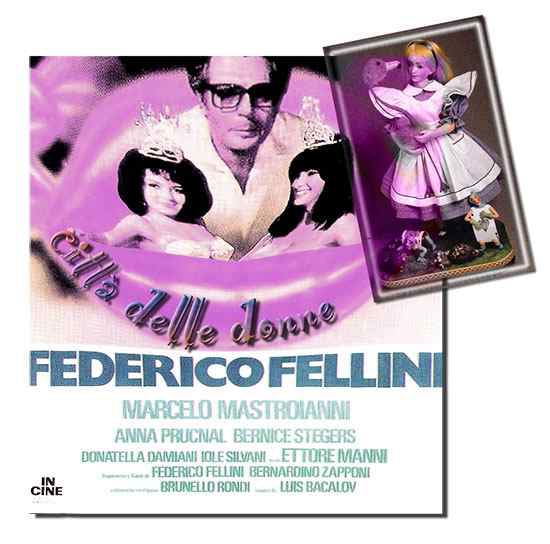
In Federico Fellini's black-and-white film 8 1/2, in which he makes a spectacle of his own incapacity to complete a movie he is working on, there are many scenes about the influence of women in his life, as a boy, young man, and mature film director. In that film, his protagonist "Guido Snaporaz", played by Marcello Mastroianni, is surrounded by adoring women who turn mean and gang up on him, until he tames them by cracking a bullwhip like a lion-tamer. In a later production, City of Women (Città delle Donne), made in 1980 shortly after Italy's wave of feminism, Fellini expands those themes into a full-length color extravaganza, taking advantage of his "auteur" reputation and seemingly inexhaustible resources. The Alice in this Wonderland is a middle-aged husband, again "Snaporaz", again played by Mastroianni, with a playboy mentality, a disappointed, bitter wife, and an apparently limitless tolerance for surrealistic nightmare predicaments. Like the Lewis Carroll book for children, the scenes and characters are more important than a story line. (Who came first in Alice? The Red Queen or the Cheshire Cat? And does it matter?)

In City of Women, the counterpart of Alice's White Rabbit is a well-dressed woman with sunglasses and a Russian-style fur hat (Bernice Stegers), whom he follows into an overheated conference of very angry feminists. In Fellini's world these are all super-glamourous and all seem to have taken much time to apply makeup impeccably. The rabbit hole does not appear until the end of the film, in the form of a train tunnel. Other great scenes include a Hefneresque super-playboy named Kazzone (literally, Big Dick) celebrating his ten-thousandth conquest, only to be hassled by tough policewomen in Gestapoesque uniforms; a wild nocturnal car ride with a mob of stoned grrrlz who try to shoot down a plane; and a balloon ride suspended beneath a giant inflatable fantasy woman with an illuminated angel's halo. Snaporaz's indestructible bones are jumped by a robust, uninhibited peasant woman in a greenhouse and by his wife in a colossal white bed while a hurricane howls outside. Snaporaz does not accept gracefully the role of sex object. The least obnoxious woman in the whole fantasy appears to be an elderly cleaning lady, but credit seems to be due to the red-haired wife Elena, who is portrayed as still in love with Snaporaz in spite of his neuroses and arrested development.

Unlike some other Fellini's movies like La Strada, this is not one to sweep the viewer up in the plot and carry her along; some have even called it tedious. It is not a happy movie, and it never quite becomes either a comedy or a horror movie, but has elements of both. I'll probably rent it again sometime.

| Technorati Tags:

Send a message to Jonathan: coffeeblogger (at) doublesquids (dot) com


The Three Cabirias

6:26 PM Tuesday, December 20, 2005

[Magic: the show-biz kind as well as the supernatural]

Now that I am a Netflix subscriber I am able to see a succession of films by specific directors, and lately I discovered how much I admire the work of Federico Fellini, the Italian auteur director who died in 2003. As a student I saw the much-vaunted La Dolce Vita and found it horribly depressing. Since then I have had a second look at many of Fellini's films and found them anything but depressing: they convey what Ayn Rand called the "benevolent universe" sense of life. No matter how desperate the plight of the leading character, there is always the ability to bounce back and come up smiling (La Dolce Vita and some later films are arguably exceptions). Fellini, also a cartoonist and a screenwriter, used and reused certain themes: magic (the show-biz kind as well as the supernatural kind), clowns and circus bands, dancing for joy, and the metaphysical equality of man, that is, nobody is too low to deserve happiness if he (or more often, she) makes an honest effort.

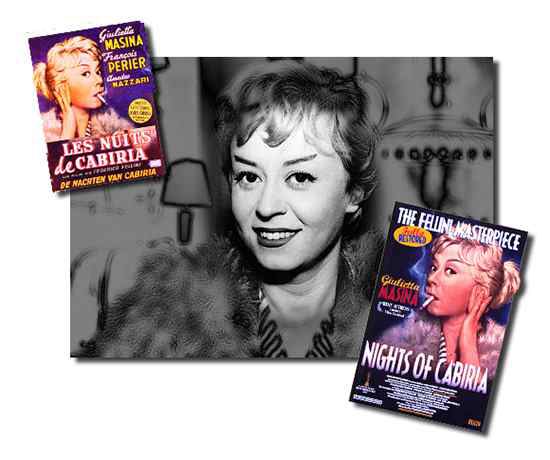
And that brings us to I Notte di Cabiria, the Nights of Cabiria, a film I saw last week after having seen it in the theater years ago. Cabiria is a spunky street prostitute, with a heart, not of gold, but rather of some indestructible material only known to science fiction. She takes good care of herself, has bought a house (a cinder-block shoebox), and does not shy away from one more shot at finding true love. The men, however, who court her do not simply lie, cheat, and steal, though they do plenty of all three. They try to kill her, and at the beginning of the film, one comes close to succeeding. Her loyal friend, Wanda, is more cynical and unwilling to trust anyone, including the Virgin Mary, whose support Cabiria seeks around the middle of the film.

It turns out that there was another Cabiria film, one made in 1914 about a young woman caught up in the Punic Wars between Rome and Carthage. Said to be an Italian classic film of the silent genre (I haven't seen it yet), the original Cabiria not only gave its name to the heroine of I Notte di Cabiria, it, or more likely other silent films like it, may have inspired Giuletta Masina, the Cannes Best Actress-winning leading lady, dubbed the "female Chaplin", whose range of facial expressions and body language can reach out and grab the tough, leathery heart of a Coffeeblogger. Masina, BTW, was also Mrs. Fellini.

There may have been a fourth Cabiria, a courtesan of Ancient Rome, but the Internet yielded no information about her beyond a brief mention. The third Cabiria was a minor character in an early Fellini film, The White Sheik, also a prostitute, who undoubtedly inspired Fellini's minor masterpiece, I Notte di Cabiria. (It was a minor masterpiece only because Fellini also made major masterpieces.) Go rent it.

| Technorati Tags:

Send a message to Jonathan: coffeeblogger (at) doublesquids (dot) com


Capote (The Movie)

7:34 PM Monday, November 7, 2005

[in the DNA of every cell, the capacity for homicide]

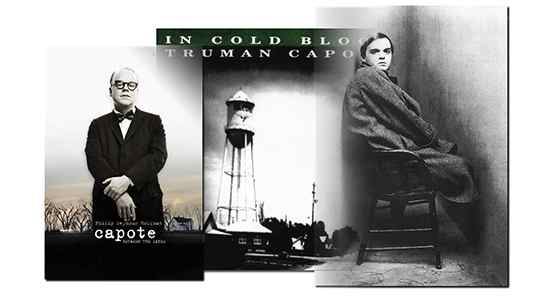
A few evenings ago I saw the movie "Capote" with a friend. Emerging from the theater, I thought "What the heck was that about?" (OK, I didn't think, "heck" but you get the idea.) Now I think maybe I've figured out what it was all about. Yeah, yeah, there were many themes including journalistic ethics, the rejection of gay men (and lesbians, bisexuals, and the transgendered) by mainstream society, the shallowness of some people caught up in their narcissistic bullshit, an appeal to be non-judgmental, the reality or illusion of friendship, and (I suppose) the stark emptiness of the Great Plains landscape. But those were secondary themes. In the movie there was great acting, with Philip Seymour Hoffman playing Truman Capote and Catherine Keener, who normally plays a highly sex-charged female role, this time being sisterly as the author of To Kill a Mockingbird. (In real life, the real author of that book was indeed a friend of the 20th Century writer Truman Capote.) In the movie, there was killing, and not mockingbirds but people: a whole Midwestern family, and another person towards the end.

And that, say I, was the point of the movie. I believe that every human carries, in the DNA of every cell, the capacity for homicide. And that, say I, explains Truman Capote's fascination with cold-blooded killers, which led to his literary masterpiece, In Cold Blood, following which his writing career petered out and he died in 1984 after years of alcoholism. Capote was raised in the southern USA, primarily in the homes of cousins, after almost being aborted in utero, and then rejected by both biological parents. In the film he repeatedly makes promises of friendship and unwavering support to a suspect in the Kansas mass killing. Did he repeatedly hear similar promises, in his childhood, from his mother and father? Did he accept the emotional sincerity of the promises (the best of intentions), while knowing that they would not be kept? Did he have the expectation that his incarcerated "friend" would react the same way? If so, was he right?

A brilliant writer, a gutsy, campy out-of-the-closet homosexual in the 1940's (!), author of Breakfast at Tiffany's (remember the landmark Audrey Hepburn movie and the character of Holly Golightly?), Truman Capote was both hero and scoundrel. Though not a fast-paced action film, "Capote" is a good flick. Two thumbs up from the Coffeeblogger. Go see it.

| Technorati tags:

Send a message to Jonathan: coffeeblogger (at) doublesquids (dot) com


Cold Start

2:54 PM Friday, June 10, 2005

[Frankly, Scarlett, I DO give a damn]

It's been six days since I posted the last article to the Coffeblog, and I don't have a clue about what I'm going to write about. This time, I decided, I'm going to start with a blank slate (a blank brain?) and see what comes out.

I suppose that this is some kind of blogger's block, a subject about which I've written before. I also suppose that it's part of some kind of cycle of creativity which has its dry spells. Perhaps it has to do with a cyclic waning of interest in the topics I've covered before.

Another thing that comes up are the blogger's questions how long? and how often? Up to now I've been writing roughly twice a week and long items as blogs go. [Pause briefly here as latte-fueled neurotransmitters reconnect neural networks.]

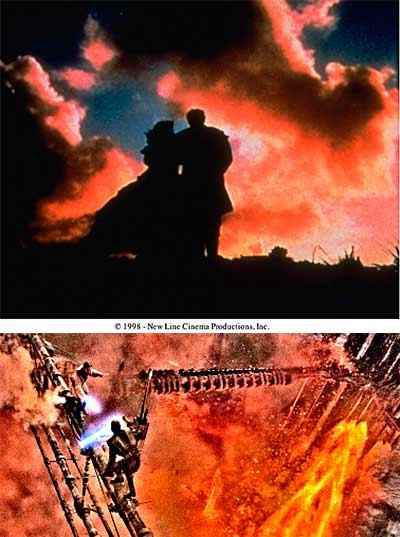
Aha! I suddenly realize what's going on here. The part I haven't told you yet is that I've been reading a lot more blog headlines than previously during the past week, especially super-popular blogs such as Technorati's Top 100. My head is spinning. What I've taken into my brain is not simply headlines or news items or opinions, or Flickr images, but a whole way of processing complex information. It's like watching the final Star Wars episode, which I saw about ten days ago. It's not just Jedi and hero myths. It's a way of using the human brain, qualitatively and quantitatively different from Gone with the Wind. An example: what has more ultimate cultural significance in Sith? The dialog between Anakin and Padme during their tender moments together, or the little flying creatures (robots?) that buzzed around on the lava planet, with apparent total irrelevance to the duel being fought between good and evil. My vote is for the flying creatures.

Terry Teachout, an established 20th Century arts journalist who has not only made the transition from print media to blogger, but has written about the importance of the transition, has much to say about the impact that blogs are having on culture. To which I will add: don't ignore the little flying creatures.

| Technorati tags:

Send a message to Jonathan: coffeeblogger (at) doublesquids (dot) com


Sith Happens

7:11 PM Tuesday, May 24, 2005

[Long Ago and Far Away?]

Let's get something straight right off the bat: George Lucas is a US national treasure. He may be the only one we've got left. If I should indulge in some mild carping or nitpicking about the final film in the six-part Star Wars epic cycle, I want it kept in context.

OK, let's get the carping out of the way so that we can get to the good stuff. I saw Star Wars, Episode III (Revenge of the Sith) last weekend, and I found it disappointing in a few ways. Compared to the original Star Wars, which hit the theaters in 1977, much of the humor, which has become a permanent part of the cultural heritage of the US (planet Earth?), was not there. Although the alien phenotypes from the original Cantina (Bar Scene) were present as a sort of manifesto of galactic multiculturalism, there was no scene in Sith with the ironic impact of the Cantina from the first film. And, of course, there was no Jabba the Hutt, nor even Carrie Fisher's Princess Leia. R2D2 and C3PO were there, with pathetic cameo roles.

The other nit I choose to pick is that the pacing of the special effects was relentless: think of a fireworks display that is all finale. (OK—that was the Meaning of Life part of today's message).

I have read other reviews which carped about the dialog or the goofiness of proper names, but I see that as irrelevant: sort of like complaining that Sophocles' Oedipus The King lacked a good car chase.

The thing about Star Wars is that it is a true epic cycle. It is a reworking of ageless myths going back to prehistory, but with an American spin. I chose a few of the mythic themes for the entertainment of Coffeeblog readers.

I will start with my old pal Otto Rank, the Viennese psychoanalyst, who wrote a book, "The Myth of the Birth of the Hero," which summarized the lives of many cultural heroes including Oedipus, Moses, Romulus, and King Arthur. Rank's own life had mythic overtones: if the Freudian circle of 1920's Vienna were the Jedi Knights, then Rank was the original Darth Vader. (Although frankly nobody could mess with the Dark Side of the Force like Carl Gustav Jung. But I digress.)

The framework of the Sith episode was right out of the Rank heroes' playbook. The hero in this case is Luke Skywalker, who was born to high-ranking parents, exiled as an infant to a wild place in the care of humble people, and who ultimately ends up killing his father.

The central myth of the Star Wars cycle, and this final episode in particular was the clash between Good and Evil, the forces of Light and Darkness (any Zoroastrians in the audience?), and particularly the theme of the Evil Empire. The Sith Lords were the bad guys in the film, the Jedi Knights the good. The central character, Anakin Skywalker, beset by Hamlet-style doubts, premonitions of his wife's death, as evil a dose of "moral equivalence" propaganda as you will ever hear outside of a "soft money" political ad, and a higher endowment of power-lust than he could handle, ended up sliding down the slippery slope, figuratively and (in the film) literally.

But wait a minute! Aren't we Americans (and of course the world-wide fans of Star Wars, who are perhaps a little more American than they want to be) too sophisticated to buy into the Evil Empire myth? We can see shades of gray, we can interpret the nuances; are we not postmodernists?

So I leave you with this question: did you or will you get a chance to vote in the last US election, or the elections in the UK, Ukraine, Iraq, Germany, Palestine, the French EU referendum, the Israeli Gaza referendum, and so forth? (Or perhaps you were a Cardinal who got to vote for the new Pope?) If so, did you (or will you) walk into the polls knowing damn well who are the Sith Lords? And if so, didn't you (won't you) try to make damn sure that they wouldn't be voted into power?

OK, maybe you didn't. Maybe it's just me. Maybe I've been drinking too much coffee lately.—JDL

| Technorati tags:

Send a message to Jonathan: coffeeblogger (at) doublesquids (dot) com


blog comments powered by Disqus Comments (View)

Go: [ Home | Previous | Archive | Gods & Myths | Cafes | Coffee | Nations & Empires | People | Arts ]
[ Words | New Media | Cinema | Gastronomy | Productivity | Yiddish ]

Add to Technorati Favorites

Copyright ©2004, 2005, 2006, 2007, 2008 Jonathan David Leavitt. All rights reserved.